74. Why High-Performing Women Burn Out
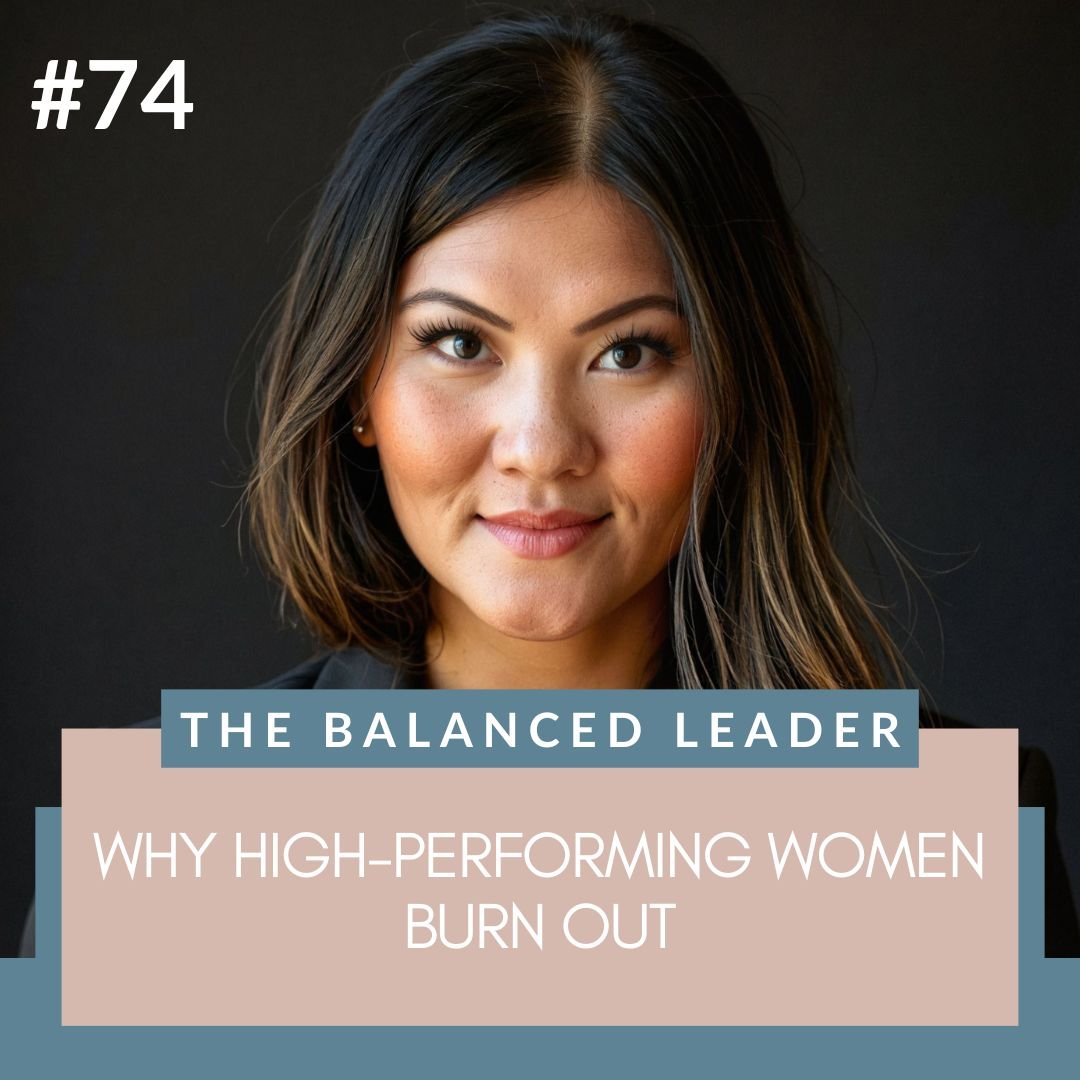
High-performing women don’t burn out because they’re weak. They burn out because they over-function.
Many women leaders who rise quickly in their careers do so because they’re reliable, prepared, emotionally responsible, and incredibly capable of stabilizing the environments around them. That energy gets rewarded early on. But at senior levels, the leadership game changes. What made you successful early in your career can quietly become the thing that exhausts you.
Tune in this week as I break down why burnout happens at senior levels and why simply working harder won’t solve it. You’ll also hear three leadership shifts that allow women to advance without burning out. These are not soft self-care ideas. They are strategic capabilities that allow you to move from over-functioning to leading with authority.
Women who take their leadership seriously don't wait for influence to happen — they architect it. Strategic Command™ is where we align both — so you stop hoping to be chosen and start positioning yourself with intention. Join us March 19.
What You’ll Learn from this Episode:
Why burnout for high-performing women is often caused by over-functioning, not workload.
How the leadership habits that helped you succeed early in your career can create burnout at senior levels.
The role emotional attunement plays in sustainable leadership and decision-making.
How strategic discernment helps you conserve energy and focus on what actually moves the business forward.
Why energetic boundaries are essential for leadership authority and long-term advancement.
The identity shift required to move from proving your value to leading with command.
Listen to the Full Episode:
Featured on the Show:
If you haven’t already, please follow the podcast and leave a rating and review to let me know what you think. Find complete instructions here!
Watch my TEDx talk: Reclaiming anger: A woman’s birthright
The Let Them Theory by Mel Robbins
Episodes Related to Why High-Performing Women Burn Out:
60. How High-Achieving Women Advance Without Burnout: Commanding vs. Coping
73. How High-Achieving Women Leaders Move From Survival Mode to Command Energy
Full Episode Transcript:
But here's the problem. What gets you promoted to director is not what will get you promoted to EVP. And if you don't shift the strategy, you plateau, or you exhaust yourself trying not to. Today I'm breaking down three steps to advance without burning out. Not soft, self-care advice, strategic recalibration.
Welcome to The Balanced Leader, hosted by Yann Dang, a Leadership and Life Coach with over 20 years of corporate experience. Drawing from her journey as a former global finance leader and second-generation immigrant, Yann understands the unique challenges women face in male-dominated workplaces.
Each episode offers insights on balancing masculine and feminine energies, mastering soft skills, and building emotional intelligence. Join us to transform frustration into empowerment and unlock your authentic leadership potential.
Hey everybody, welcome to today's episode. We are talking about why burnout happens at the senior level and what you can do about it. So early in our careers, we are rewarded for being reliable, being agreeable, being prepared, being emotionally responsible. You became the fixer. I was the stabilizer, the one who smoothed meetings over and that worked until it doesn't. At senior levels, the game changes. You are no longer rewarded for execution. You are rewarded for discernment. You're rewarded for clarity. You are rewarded for emotional steadiness under pressure.
And here's what most women do. They double down on effort. More hours, more fixing, more managing other people's feelings, more proving. Burnout is not about workload. It's about identity misalignment. If you're still leading from good girl energy, the fixer, the prover mask, your nervous system never rests, and that is unsustainable. So let's shift it.
All right, I'm going to dive into the three steps to advance without burnout. And they're steps, but they're also skill sets that I teach in the containers in my group coaching, right? This is about you expanding your identity and having these three skill sets to enable you to advance without burning out.
Number one is emotional attunement. You cannot lead what you suppress. Most high-achieving women are incredibly attuned to everyone else, but disconnected from themselves. This was true for me too. I could tell you how everybody else in the room was feeling, but within myself, I might not know what was happening because I had spent so little time attuning to myself. So you might feel irritation. You might swallow it. You might feel resentment. You override it. You feel angry. You reframe it into something more palatable. That disconnection creates burnout over time because your body keeps score. Emotional attunement means you notice what you feel without judgment. Understanding your activation patterns or emotional triggers, it means the same thing. Regulating before responding.
Okay, here's a 60-second reset you can use in any meeting. Pause. Inhale slowly. Notice yourself in the chair. Name the emotion silently. Notice what it is. And of course, I teach the five primary emotions. Fear, hurt, sadness, joy, anger. But if another emotion comes up like frustration or annoyance or defensiveness, that's fine. Don't judge yourself. Ask yourself, what outcome do I want? That micro pause alone changes leadership outcomes because reaction creates drama, regulation creates authority.
I'm going to share a personal example with you all with me and my husband. We were in this tense conversation. I was having lots of emotions, and there was a part of me that was wanting to be very defensive with him and just shut down. But there was another part of me, right, that was more emotionally attuned to myself that was like, you feel hurt right now. You feel sad. Your brain is telling you that your husband doesn't care about you, right? And I was able to slow myself down and have this conversation with myself, which was like, but it's not true. I know he cares so much about me. I know he works so hard for me and our family. And so it's not true, even though my brain is offering me these thoughts when I'm very tensed and activated and feeling very, having lots of emotions happening.
But my ability to pause myself and have this conversation has me not reacting with drama, blaming him, shaming him, justifying my behavior. Instead, I slowed everything down. I took a deep breath. I was able to feel connected to myself and to comfort myself without coddling myself or suppressing the emotions. And then I was able to ask him a curious question that I literally had. I was like, you know, is this how you're thinking about it?
And in my ability to use my emotions in that way with that attunement to myself, he was able to speak up and say what he felt. And instead of pushing everything under the rug, we were able to have a emotionally attuned conversation. But I wouldn't have been able to do that if I wasn't attuned to myself first. I might have put on some sort of survival mask or went into some drama. Instead, I was able to slow down time and actually meet myself emotionally where I was at in order to connect and discuss with him how I was feeling and asking curious questions without defensiveness or drama.
So that is the first and number one skill. You can work on emotional attunement with yourself. This is the foundation of command. Without it, you cannot sustain advancement. You cannot move forward if you're constantly reacting to situations or if you're constantly pushing down your emotional triggers or that activation. What I'm offering here with emotional attunement is being able to slow down so you can be with yourself in order to connect and be with other people. But oftentimes, women are headed for burnout because they just stuff it and they just move on and on and on and they carry all this emotional burden, resentment, anger, frustration with them all along the way. And over time, that has them just totally disconnected from themselves and they say, why am I doing all of this stuff? You know, so I want you to really pay attention to yourself. But that's number one, emotional attunement.
Number two is strategic discernment. This is where most women stay stuck. You assume everything requires your energy, and it doesn't. So many women are so used to fixing everything in front of them, right? I do it too when I'm, I work from home and then I'm like, oh, I got to fix this, I got to do that. But no, I'm like, no, you cannot do all these things. And you have to do your work. You need to get the work done that you said you were going to get done. And I say it in a kind way to myself, but it is a forceful way because we live in a very distractible place, right? You can look at your phone and get totally distracted. You can look at the micro environment and get so intoxicated by the injustice that's happening.
And what I'm saying here is not to ignore the world around us, but to watch how the data you consume, the thoughts that you have in your head, if you're not disciplined about them, if you're not discerning about them, you could be leaking a lot of energy and you could be spending a lot of emotional energy on things that don't matter that much. This is partly why I don't know if people here have listened to Mel Robbins, but her Let Them Theory is so fantastic because it's like, let them do what they need to do and you focus on you. It's freeing, it's liberating. This is strategic discernment. It's asking you, does this actually move the business forward? Is this worth political capital? Who needs to own this instead of me? And am I solving something that isn't mine?
Burnout often comes from misdirected effort. You fight the wrong battles, you overcorrect minor comments, you take on emotional labor that belongs to someone else. Discernment is executive maturity. It's what I teach all of the women in my containers. It's restraint, it's knowing when not to respond. It's knowing when silence is stronger. It's knowing when to let something go, and it's knowing when to escalate and when to let things play out. This is the shift from tactical leaders to strategic leader.
So I want to share that with you, right? Because there are moments where you're like, okay, do I want to be right here or am I willing to step away, right? And I actually noticed my boss, my CFO who became my mentor, I saw her do this so well. There were certain meetings where another male leader would just not get what she was explaining, right? It might have been something technical where she was like, well, this is how the calculation is done. And I watched her instead of, you know, continuing to explain and, you know, trying to help the person understand, I watched her just take ownership and say, this chart is confusing. Let us redo it and we'll send it to you, and move the meeting on.
I was noticing that and I was like, wow, that's discernment. And when it happened to me, I was in a meeting with again, a very senior level executive, and I was trying to explain something and he didn't get it. Instead of me saying, you know, taking on this like, let me explain it to him, let's take up all the space. I said, hey, I get it. This chart is very confusing. Let's redo it so that it makes more sense to you and we'll send it off, in a very controlled manner. And it's like that strategic discernment in the moment is leadership because it's not worth it. It wasn't worth it for me to be like, you're just not understanding what I'm saying and I'm going to keep saying it and we only have 15 minutes left in this conversation. But by zooming out and having that discernment, I was able to conserve my own energy and I was able to direct the energy of the room to the next thing that mattered in the moment. It wasn't about me, it wasn't about ego, it was really about what's the message? What's the next level message?
All right. And this actually goes on to the next piece, which is energetic boundaries, right? If you are strategically discerning, then you will have better energetic boundaries. This is the one that changes everything. Energetic boundaries is not about saying no more. They are not about absorbing what isn't yours. So you stop over explaining your decision, managing grown adults' emotions, filling every silence, taking responsibility for everyone else's comfort. This is emotional loads that women have been conditioned to hold, but you can learn to let it go. And instead, you can start holding steady eye contact, letting silence breathe, delegating tension back, maybe even asking what do you want to do about that? Making others responsible for their own reactions.
I'm sorry you feel that way, right? You can just not have to own other people. Other people's emotions. They can be with it. Let me give you another example. I have a four-year-old. She has lots of emotions. My job is not to manage her emotions. My job is to teach her how to regulate her own emotions and to support her in that process, right? Sometimes that process is allowing her to have her emotions and feelings and express them in the space she needs. I'm teaching her how to have space for herself, how to emotionally attune to herself, how to use her voice. But we need to slow down before we can move quicker, right? It's not about being cold. This is about being in command. When you hold boundaries calmly, people recalibrate around you. When you don't, they unconsciously place more weight on you, and that weight over time becomes burnout. That's why this is so important.
And this is the identity shift, right? Here's the truth. Burnout isn't solved with better time management. It's solved with identity recalibration. If you still believe I have to prove my value, I need to manage perception, I can't disappoint anyone, I need to be the fixer, you will over function forever. Advancement requires an internal shift from proving to leading, managing to directing, absorbing to deciding. This is the core of my Self-Empowered Leadership Formula. We reveal the pattern, we regulate your nervous system, and we advance strategically. It's simple, it's not easy, and it requires support.
And this is exactly why I have created Command, my six-month group coaching container. This is the work that is done in these containers where you are learning to embrace a new way of being. You are ready for that identity level recalibration and long-term advancement without burning out. That's what this is all about, right? Being able to move forward and feeling less and less burnout because you have more and more space for you.
Advancement without burnout is not about doing less. It's about leading differently. And if you're feeling the friction right now, that's not failure. That's growth asking for structure. So if you want more of this, join me. We've got open enrollment starting soon, and I would love to have you in these containers. But go to school on this. I want you to take this seriously. Notice for yourself, how can I start being more emotionally attuned? Do the exercise that I shared at the very beginning.
Also, strategically discerning. What is entering my mind? What am I allowing to take up space in my here and now? What things am I doing that I don't need to do anymore? And what energetic boundaries can I be placing, right? What can I let go of? What can I say I'm not responsible for? What can I give myself permission to give to someone else? These are all powerful, powerful ways for you to advance without burnout.
All right. If you love this episode, please share it with me. I'd love to hear what you have to say. You can find me on LinkedIn and DM me directly. You can leave a comment in a review. And of course, please share this with your network. This is powerful tools. I want to help over a thousand women every year advance without burnout, and I want you to have these tools and for your network to have them as well. Have a beautiful day ahead. Take good care. Bye.
Thank you for being a part of The Balanced Leader community. We hope you found today's episode inspiring and actionable. For more resources and to connect with Yann, visit us at aspire-coaching.co. Until next time, keep leading with confidence and purpose.
Enjoy the Show?
Don’t miss an episode, follow the podcast on Apple Podcasts, Spotify, YouTube Music, RSS, or wherever you listen to podcasts!