62. Self-Mothering: The Leadership Skill Every Woman Needs with Dr. Gertrude Lyons
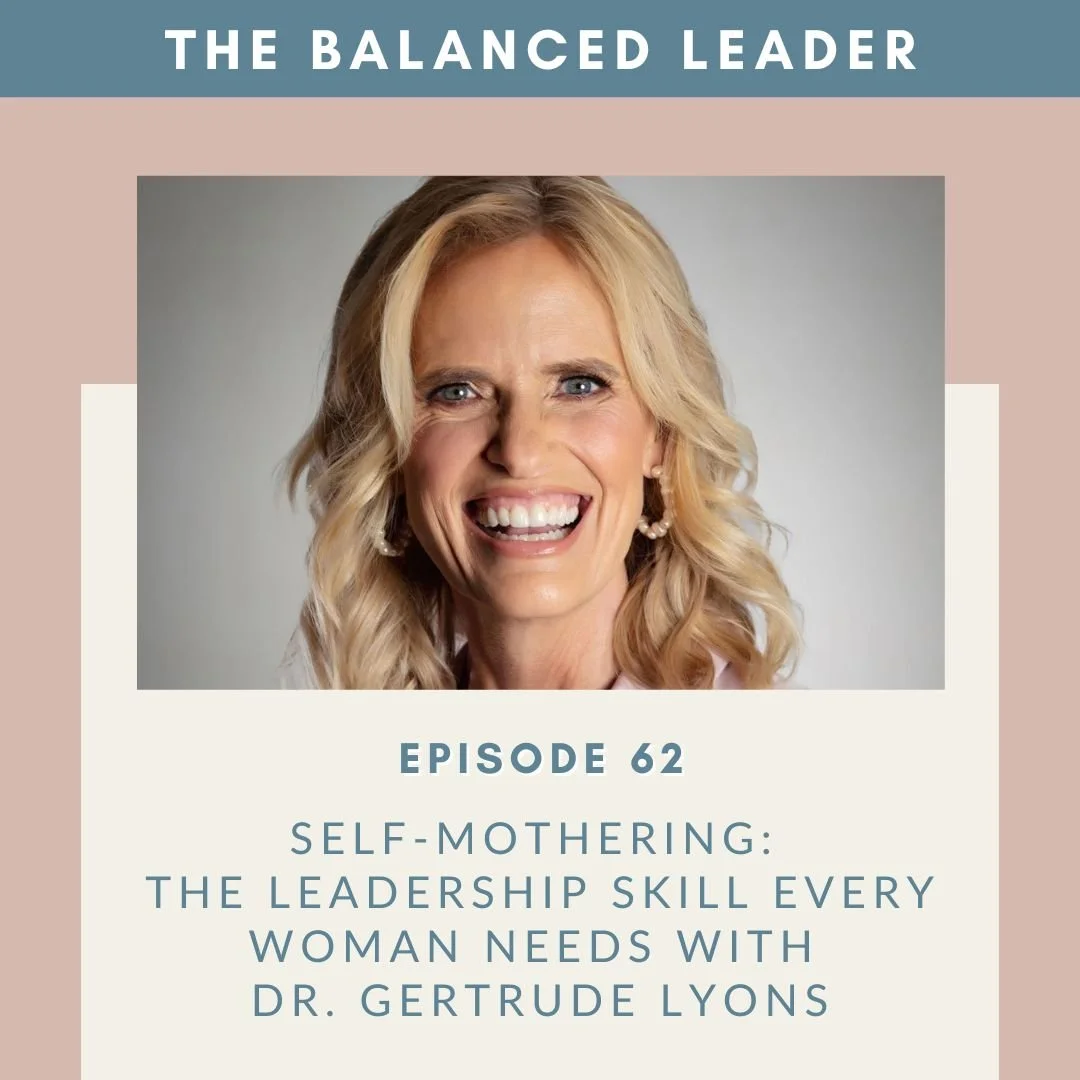
What if the reason you're exhausted isn't because you're doing too much, but because you're mothering everything and everyone except yourself?
Your work, your team, your family, your vision, your next level. You hold it all. You anticipate. You stabilize. You make it work. And your own needs? They get handled later. In this episode, I’m joined by Dr. Gertrude Lyons, a transformational leadership and development coach who believes something that stops most women in their tracks: every woman is a mother, with or without children.
Join us this week as Dr. Lyons and I explore why rewriting how we mother is one of the most powerful identity shifts a woman can make. You’ll learn why self-mothering is the leadership skill no one taught you, the difference between sensing others' emotions and knowing your own, and simple morning rituals that rewire your nervous system for presence. This conversation will change how you lead in the year ahead forever.
Command is my six-month leadership accelerator and mastermind for women who are ready to show up with clarity, composure, and unapologetic authority. Click here to book a consultation with me to figure out if it’s the right next step for you.
Meet Dr. Gertrude Lyons:
Dr. Gertrude Lyons, Ed.D., M.A., PCC, is a transformational coach, educator, and creator of the Rewrite the Mother Code movement, with more than 20 years of experience empowering individuals, couples, parents, and families to live fulfilled, authentic lives through an integrative and deeply personal approach to growth and self‑discovery. Drawing on her extensive training in psychology, leadership and coaching, breathwork, and Whole Brain Living, Dr. Lyons brings a unique blend of academic insight and intuitive support to her work, helping people redefine cultural norms around mothering, claim their agency, and create lives aligned with purpose, joy, and abundance. Beyond her coaching practice, she hosts the Rewrite the Mother Code podcast, writes and speaks on women’s development and relationships, and enjoys a life of travel, family, and connection.
What You’ll Learn from this Episode:
Why every woman mothers - whether it's teams, careers, or dreams - and how this creative energy shapes leadership.
The unconscious mother codes that keep high-achieving women sacrificing themselves and pouring outward.
How to distinguish between sensing other people's emotions versus actually feeling your own.
Why emotions are power tools for decision-making, not distractions from rational thinking.
Simple morning rituals that calm your nervous system.
The difference between doing-based and being-based approaches to self-care.
How asking for help and identifying what you truly desire transforms leadership sustainability.
Listen to the Full Episode:
Featured on the Show:
If you haven’t already, please follow the podcast and leave a rating and review to let me know what you think. Find complete instructions here!
Rewrite the Mother Code: From Sacrifice to Stardust - A Cosmic Approach to Motherhood by Dr. Gertrude Lyons
Episodes Related to Self-Mothering:
38. The 20-Foot View: Why Successful Women Need to See Their Whole Self
58. Is Your Loyalty Actually Self-Abandonment? How High-Achieving Women Over-Give at Work
Full Episode Transcript:
Today's conversation is about self-mothering, not the soft version, but the leadership version. The kind that creates boundaries without guilt, power without burnout, care without self-abandonment. Because here's the truth: most high-achieving women were never taught. If you only know how to pour outward, your leadership will always cost you.
And as we close out the year, I wanted to explore something deeper: the theme of motherhood, identity, and the rituals that keep us grounded, and why these practices are so essential for women who lead. This episode will change how you lead in the year ahead forever.
Welcome to The Balanced Leader, hosted by Yann Dang, a Leadership and Life Coach with over 20 years of corporate experience. Drawing from her journey as a former global finance leader and second-generation immigrant, Yann understands the unique challenges women face in male-dominated workplaces.
Each episode offers insights on balancing masculine and feminine energies, mastering soft skills, and building emotional intelligence. Join us to transform frustration into empowerment and unlock your authentic leadership potential.
Yann Dang: Welcome to the show. Today, we have a very special guest on The Balanced Leader. It's Dr. Gertrude Lyons. She's a transformational leadership and development coach and expert who believes something that stops most women in their tracks. Every woman is a mother with or without children. She teaches that we mother ourselves, our careers, our dreams, and that rewriting how we mother is one of the most powerful identity shifts a woman can make. This conversation is going to move something inside of you.
All right. Welcome to the show, Gertrude. I am so happy to have you here. I also wanted to just share personally, I have coached with Gertrude and she has impacted my life so much, even my births. I've had these very empowering natural births because she opened my eyes up to what's possible. And welcome to the show. Tell us more about yourself and we're going to dive into this super powerful episode. So, come on in.
Dr. Gertrude Lyons: Oh, well, Yann, what a wonderful intro and what a blessing and honor it is to be here on your show and just have time with you. Thank you.
Yann Dang: Yeah, you're welcome. So, we are going to dive in quickly because I think this is going to be something that a lot of women ask. I know I've coached a lot of women. Sometimes they have kids, sometimes they don't, sometimes they want to have kids. But when you say, every woman is a mother, even without children, what do most women misunderstand about that statement at first?
Dr. Gertrude Lyons: Yeah. Well, there's a big misunderstanding in general, but I think we're catching up to this one, Yann. And I remember way back when doing my doctorate and having you part of a seminar that I was doing as my study for my doctorate, and it was, this was something I just dropped in there. It was it was a preparation for motherhood, was the work I was doing. How do we prepare ourselves for such a big, you know, potential event in our lives? So, the women who attended, no one had children at the time, right? It was at a point in their life.
And when I shared with the group this concept, which I believe is true, because when the first time I heard it, I'm like, "Well, that just feels like one of those truths." And why have we been believing anything different from the fact that we all mother? That children is this beautiful way that we can mother in this lifetime as a woman, but it's not the only one. But when you ask how is it that we've come to grab onto this and us all believe it and think that we're only a mother if we have children is years and years of programming, you know, probably thousands of years of programming that has really led us and been wired in to believe that's our purpose on earth.
That's why women are here and that the our highest calling is to have children. And it's it is a beautiful calling, but it also is something that we actually have choice in and that when we really look, we are natural creators. We're original creators and our womb is a metaphor. We're creating relationships, careers, you know, the teams we lead. We're mothering everywhere in our lives. And if you choose to have children, that's one of the facets of mothering that I call motherhood that we can take part of.
But for us to, you know, and to see the women in that seminar have such a emotional reaction to that and to see themselves in the things that they had already been doing in their lives that they were already mothering was so beautiful that I really wanted that I really felt like this is something that needs to be said a lot more and a belief that really needs to get broken. So, I'm so glad you brought it up because we have this mothering creative energy, but that the most important person we need to mother is ourselves. So, you mentioned that. And that's not just a tag on to this whole we all mother. It's probably one of the key features of it.
Yann Dang: Well, I'm also curious because the way that you're talking about mothering, does it apply to men as well? Is it something that they do in their lives and their careers? We just don't name it that way.
Dr. Gertrude Lyons: We don't name it that way. And probably because it ties to the fact that we haven't really valued the mother paradigm, the mother energy. I call it mother energy. And it's a more feminine value energy, creative energy. And yes, for sure. Just like as women, we have masculine ways that we, you know, live and lead in our lives. They've just have been in the forefront more and this isn't one that's talked about as much and as valued as much. So, yeah, we all have it and it's all something we bring to the table.
Yann Dang: Yeah, I actually, you know, for myself and my leadership, mothering has been a kind of a charged word, you know? In some ways, it's like, no, they're not. You know, when I think about my direct reports, I would be like, I'm not their mother because there's like this, I don't know. I think this underlying belief that I have to sacrifice for them, which says a lot about my upbringing and my own mother. But I remember I had come up with a phrase that really helped me think about the type of mother I wanted to be for my direct reports. And it is that I am sort of the sort of mother that has high standards and my job as a leader was to create excellent professionals.
And it helped me to like tell them the truth about things, to give them feedback, but in a way where I didn't feel like I, you know, was sort of going against myself and that I had like good boundaries in place because I think sometimes, and this is kind of this next question is like, you know, this unconscious mother code that shows up in high-achieving women. You feel like you have to pour into everyone and, you know, there's so many women leaving the workforce now and the system isn't quite set up for women, right, to take care of themselves. So I'd just love to hear your perspective on, you know, what do you see in high-achieving women and some of the unconscious maybe mother code that isn't really serving them?
Dr. Gertrude Lyons: Yeah, well, I really appreciate that question, Yann, and it is definitely in the forefront of the women I work with also. And it's why I started leading retreats that are called self-mothering retreats because I find that most of the women who come are high-achieving women that feel burnt out, that feel like whether it's with children or their businesses or, you know, in teams that they lead, they are giving, giving. And we have been told, it's another one of these in my book that I share as a mother code, which is that, you know, you're doing it right. This is what we've been told. Like, you're doing, you're a good mother, you're a good leader, you're a good caregiver in whatever way you're putting your caring energy into something that to do it right, you have to sacrifice yourself.
And that has been, again, wired in for many generations. We haven't seen, we're only now really starting to emerge out of it. So it's new and we're all like, yeah, I get it. Of course, I need to put myself first, but I don't have a clue how. And that's what I find that the women who come are like, I'm yearning for something that I don't know how to do for myself. And then we discover and we it becomes an adventure, not another to do because I think that's something that happens for women a lot. It's like, oh, my self-care, the self-mothering thing, that's just another thing I have to add to my list.
Yann Dang: That's, you know what people tell me, like, you know, the gratitude, like it starts to own you. Like you have to do your gratitude. I'm like, don't do it if it doesn't work for you. It's supposed to be for you, not like something that you get like an A for.
Dr. Gertrude Lyons: 100%. 100%. And what I have found is that as women just start to peel away some of these beliefs, some of the wiring that they've had that, you know, to be valued and good that you're sacrificing yourself, that they realize, oh, the world doesn't fall apart. Like we have so many really deep unconscious beliefs of what will happen if we ask for more support. And that's the other thing, right? You're supposed to be able to do it all yourself and do it alone and, you know, support is a weakness, some of these, there's other things that tie into this self-sacrifice aspect, which is that's a big one.
And when we can start, you know, practicing other behaviors, like giving, and that's what I'll do is I'll give assignments to ask for things, as you know, and look at what it is that you deeply desire or want and discover that this has been a lot, this is so much, so much of what's wrapped up around this is how much do we value ourselves? How much do we feel like we deserve to put ourselves in the forefront, you know, and move ourselves up the ladder of priorities is, you know, kind of what we've been told and that it's so ubiquitous in our culture that we don't even think to challenge it or understand that's something that really is going on pretty deeply and unconsciously.
So, we take little steps to practice and see, you know, do any of these beliefs come true? Does everybody leave me if I ask for help or, you know, when I take - when I do some even, you know, some self-exploration, and we can get into like what is self-mothering look like, but I think, you know, these getting, raising our awareness of kind of what we're up against and having a lot of compassion and grace for that journey.
Yann Dang: Yeah, I mean, I see it in so many women who get stuck in certain roles in their company, right? They're the glue, they're the therapist, they're the person who, you know, maybe they're the trusted partner, but there's also, and I think it's like in that awareness when it becomes so autopilot and it feels like I can't not do this thing or I have to do this or I have to do that. And then it feels more depleting than it does energizing because you feel like this is the, you know, sort of brand you've created for yourself. And it often times, what I see for women is that they're so used to not putting their own agenda first or themselves first, that when you hit a certain level of leadership, you're supposed to be the authority, you're supposed to be out there saying what your sort of ideas are. And it's such a big shift because I see women, and this was my own career, right?
We rise very quickly. We're really good at anticipating what others need, what leaders need, what our team needs. But then once we get to that power position, it's like you can't play by those rules anymore because it's not sustainable. It's like you can't be that like sort of collaborator that's always like the glue when you're also, you know, maybe really disagree with other people. And so there seems to be another level of tools that you have to learn at certain levels. But this mothering piece is so important to that. So, I think this is a great segue into these rituals, right? Because you talk about rituals as like a stabilizing force. What are the rituals that most directly rewire a woman's nervous system and leadership presence? I know that's like a big one, but we'll just dive into it, you know?
I know that there's not just a one thing, but I think this is what my audience is going to be excited to hear about because, you know, and maybe there's a variety of things. And I always tell my clients like, you know, this is an adventure to try on, not something you get right. It's something that you start feeling. But I'd love to hear what your thoughts are.
Dr. Gertrude Lyons: Yeah, thanks, Yann, because as you said, yeah, there's the great thing about this is there are an infinite amount of ways that - and rituals and things that you can do for yourself. There's no, you know, this is the one that does it. But that can be a little overwhelming then too, right? Like you
Yann Dang: No, people are like, give me the answer. Tell me the, you know, or give me the small steps.
Dr. Gertrude Lyons: Yeah, we can definitely do small steps, right? We can definitely do small steps.
Yann Dang: I think you've also drawn to like this bigger framework, right? Like that the more we take care of ourselves, and I think there's a study that's done by the World Health Organization, which I think is amazing and I feel like every woman should have like that in their office or something. But it talks about how the well-being of the family system really is dictated by the woman. And if you think about family systems and you expand it to the workplace or you expand it to maybe your family of origin or your friend group, right? Like really expanding that mothering thing. It's like, you know, basically what it found is like the number one indicator of like the family unit, you know, working well was how well, the well-being, the mental and emotional well-being of the mother, the health piece. So I'd love to just hear, yeah, what your thoughts are.
Dr. Gertrude Lyons: Okay. Let me just comment on that, Yann, because that's so true. And that's those studies and that awareness out there, I love to say this, it's evidence-based that everybody benefits when you take care of yourself. I really made that point in my TEDx talk because I'm like, you really have to get that it isn't just a nice thing or something that we're just saying and to make, you know, to like, I don't know, give you a little like so you can do more.
Yann Dang: I think that's just our very like masculine patriarchal society, right? It's like, no, this is everybody wants an easy, not an easy answer because it's not easy to work all night, but mentally, right, it maybe be less stirring, especially if you always saw your parents working hard and you're like, well, this is the key to happiness or success. I just head down and get this stuff done.
Dr. Gertrude Lyons: Yeah. Well, and I think you point to something that I, you know, I think your audience and I know I've come across this with a lot of women and maybe even myself, is this difference between how we value doing versus being and productivity, you know, versus, not versus, but in addition to being, right? It's like, I think that's that awareness just to know this is a big step to even start putting on equal on the equal playing field that our being things that are going to relate more to our being. So when you talked about rituals and things that we can start adding in to value ourselves, I tend to go a little more being based than necessarily doing, but I don't know, you're still doing something.
Yann Dang: Well, say something more about the being space. Like maybe what does that look like? So we can make it a little bit more tangible for the…
Dr. Gertrude Lyons: Because the first ones that came to my mind, Yann, were if it anytime I'm getting, you know, women started in this self-mothering and being with themselves and giving themselves, you know, this loving the loving energy that they give other people and what they're giving out so much is giving it to themselves. So, a lot of times, I have them start getting acclimated, reoriented to their emotions, to how they feel and how they feel emotionally, tuning into their bodies, listening to themselves and their intuition. And because that has, you know, not been valued, has been actually demonized for us to vilified when we say that, you know, and we, well, I just have a feeling about this or, you know, being emotional in our workplace. I mean, you know, the gamut, it goes on and on, right?
Yann Dang: It’s just so interesting though with like the biases between men and women when they're like sort of the context within, oh, they're so emotional. But you see a man come into a boardroom, pound the table, or speak loudly and they're like, this is leadership. Like this is, wow. But he's like very emotional. And that emotion actually translates to, I don't know, a commanding presence often times, you know? But for women, there are certain types of emotions that feel like they're okay at work and not okay. This is like sort of stigma around it. So it keeps people kind of in this like little like box of like, how am I going to be?
Dr. Gertrude Lyons: And it isn't something, and I like to say this too, it isn't something that, you know, I encourage women or when they're, you know, kind of reorienting to themselves and their emotional states. It isn't that suddenly we're being asked to like come in and show our emotions to everybody because, but we've shut them down so much that we're not even sharing them with ourselves, right? So this is a process of getting in tune with yourself and starting to name what certain emotions are: fear, hurt, anger, sadness, joy. You know, what is it that I'm feeling at any given moment because that has data. It's valuable information for us in the decisions that we're making.
We can't make decisions without being in tune with our emotions. Like if our emotional centers are, if we're cut off from them, we literally can't make a decision, you know? And that's such a belief that I always want to debunk for people because we think like, oh, having emotions gets in the way of me, you know, being rational or making decisions. No, like we get hijacked by our emotions or they shut us down or we run away from them versus when we can even just start naming them within ourselves.
And this can be a total inside job for a while and something that, you know, you're doing just with yourself and exploring for yourself before you decide if you want to share it with others or where it might be appropriate. And in actual work setting or, you know, in the boardroom because it still is stigmatized, right? We still have those stereotypes. But women who do start getting, you know, acclimated to them and seeing the power in them and seeing that this is our emotions are powerful. Like they're a power tool for us, right? And women, we tend to be a little more accessible to them in ways and we get that they give us information once we start tuning back into them.
Yann Dang: Yeah. Well, I also think it's so interesting because as a mother, like you're so attuned or that's the thought. You're very attuned to other people's emotions. And some people that I know they call themselves an empath and they have strong feelings that they notice in themselves about other people. But I also notice like there's a difference between sensing other people's emotions, reading other people's emotions versus your own. Like sometimes you can get like absorbed them or sometimes you can get sort of, I guess, enmeshed with them where you're starting to have feelings for other people, but you're really unclear about, you know, how you feel about it because maybe you've not ever asked yourself how do you feel about it?
Dr. Gertrude Lyons: No, that's so an important distinction, Yann, because we want to know what we're feeling first and that's like the first indication of what you're saying is how much I think also as women in workplaces and with our children, we put ourselves and are looking outside of ourselves for how we're supposed to do things, to how we're supposed to feel, and our responses are overly attached to how everybody is responding around us or the feelings like you said, the feelings that the people close to us are, our children or the people we work with or for are having. But when we can tune into ourselves first, it's an important boundary is what I'm trying to get at.
Yann Dang: And I think that's probably where a lot of women get stuck with those boundaries because sometimes when you feel like you're doing emotional work or you're being emotional with other people, that you're really in touch with your own feelings. But actually, it could be, you know, there could be like you're actually more in touch with other people's feelings because that's where your awareness is. And there's actually a disconnect to yourself.
Dr. Gertrude Lyons: That's a journey that I think is a really just to name as part of a self-mothering journey is, oh, you know, we came to be that way for a reason, right? Like there's these deeper explorations depending on how deep we want to go in how we got wired that way. How is it that I got wired to be so sensitive to the environment around me? Well, usually it's because I needed it as a child. I needed to have that, call it a defense mechanism. In that realm is it protected me. I had to know, I had to have super sonic radar to keep myself safe. And we don't even realize how strongly we've adapted behaviors like that at times. And then that's how we operate in the world. And meanwhile, we've left ourselves behind, right? Like we’ve…
Yann Dang: So we're so attuned.
Dr. Gertrude Lyons: so attuned out there that it's like, oh, and it doesn't matter what I think just so either everyone else is happy or I can keep everybody calm because, you know, it's not safe to let anybody, you know, anybody's emotions get too strong. It's, you know, these are like really beautiful deep, call them mother wounds, call them, you know, wounds of some sort that I think is part of the beautiful journey of this self-mothering. And, you know, again, not something you have to do, but it's so informative. And when we want to start, you know, reclaiming ourselves and putting ourselves first, those kinds of understandings, they just they give us a roadmap or, you know, they give us data that we need that makes it feel like, oh, okay, great. There's a reason that's how I respond so reflexively or why it's so hard for me to put myself first when we can just, you know, kind of look back and look at what got wired in our upbringings, look at how we operated in our family system that we will then create, you know, we can do our best to be conscious about it, but our systems are going to gravitate to what it's comfortable with and what it knows because it wants to keep us safe.
But once, I think it's a superpower to understand like, oh, I can actually understand this and then I have more choice. Then I have more choices in situations on how I want to respond or where I want to put a boundary or where I may need to do something differently than I'm used to doing it and see what happens. Like you said, be curious, experiment, you know, understand and break some of these long-standing beliefs.
Yann Dang: What I'm hearing a lot of is just like this connection with yourself. And I oftentimes tell my clients like, well, how would, you know, do it if it was a little child, right? Like how would you talk to this little child? And it's interesting what comes up, right? Because it's like when it's about them, they're like, it's so much harder, right? But when they're it's like, you know, if your friend came with you, like just asking those types of questions helped to, you know, ground us and to create that relationship. So what do you, I mean, as you talk to people about really discovering these emotions, are there certain rituals that you have or that you have people like, you know, notice or, you know, what comes up for you around that?
Dr. Gertrude Lyons: Yeah, a couple things that come to mind ritual wise, Yann. And one is like super simple that I adopted, I don't know, I've been doing this probably more than 5 years now, which is, you know, being aware of kind of what the emotional state was when I was waking up in the morning. And I realized like it's usually fear, right? And maybe that's why I was hitting the snooze alarm so much or why I just felt like, you know, but my stress levels, I could sense and tune in were pretty high. So what could I do, you know, just easy, because I didn't want to do something I had to get up an hour earlier, you know, to get myself into which I'm totally in favor of, you know, for people.
But just we're looking simple here and just to see how simple it can be, which is when you look at and you I've studied things about our nervous system and calming our vagal nervous system and our wiring in that way, there's a lot of simple things that we can do. And I'll give a couple of them. But the one I do, I'll say first. The one I do is, so smiling sends really good signals to your brain. And, you know, it does more than just like think that like we're happy. It doesn't have to. It just our body really responds to it and it automatically soothes us. So I started this ritual where if I wake up, then I will smile. So it was my first noticing in the morning of like of waking of any sort. It didn't have to be that I was going to get out of bed yet. But just I'm aware that I'm awake and smile. And, Yann, it's so funny because I it felt so awkward. Like I felt like my face was doing something really weird and…
Yann Dang: Was your husband like, what's going on?
Dr. Gertrude Lyons: That's so funny. I don't think he ever noticed. But just it has really, you do something like that over time and the way it has, you know, calmed my nervous system, I can easily get out of bed now. It doesn't, I don't start my day in such a high level fear state and it makes a difference. You can do other things like hum when you first wake up or when you're kind of up and getting things going. It doesn't have to be that I set aside an hour to meditate and work out and those things are really good and anytime we can do something, you know, more lengthy, but just little things like that, like singing, humming, you know, just touching yourself, looking at yourself in the mirror and like you said earlier, like, little girl, good morning and saying your name, good morning, Yann, good morning, Gertrude. You feel a little dorky and silly when you first do it, but then you realize it feels really good.
Yann Dang: Well, it's funny because, you know, like as a mother, right, when my daughter comes in, sometimes I'm like, oh, go change out of your pull-up. But often times, I'm like, oh, like how was your sleep? Like give me a hug. And there's just a natural sense of that mothering. But I love this like, it's so simple. Connect with yourself in the morning. And I do think that there's something about the morning, even when I've done like hypnotherapy, like hypnobirthing type stuff. Everybody's always like, listen to it first thing in the morning, right? Like, this is where you're kind of going out of that sleep stage where I do believe in that sleep stage, you're processing a lot of emotions, you're making sense of things. And as you wake up, there's just like this moment of where, you know, conscious, unconscious kind of merges together.
And I love this ritual because it's something every busy woman can do if she sets the intention to do it of just noticing, well, how do I feel as I'm waking up? It's so interesting with the smile piece because I've been thinking about this a lot because there's a lot of women who get the feedback at work to smile more, right? And they get really charged up about it because they're like, you know, what if I'm not meant to smile? So it's interesting because I think there's a context in here that's really important. I think there's one context where if you know yourself deeply and you know the message that you're trying to give, you say, hey, I don't want to smile in that moment. It wasn't a moment to smile.
But I think there's a broader context where women are so on edge. I do believe sometimes men say smile more because they want them to relax and have more fun and be lighter, which isn't bad, right? I think sometimes you could switch it around where they're like, you want me to be like this happy, bubbly woman. And it's not always that way. But I think this is like the emotions, right? Get you clearer on what that is, right? It's not just, you know, all or nothing, because I do think if you're, and I, you know, work with so many women, they always ask me, what can I do to be more present? And I said, relax, have fun. It seems so simple, but when you are in that state, you're more open to things and you're more present and people are naturally drawn to you. You're more magnetic, but you are more connected to yourself.
But if we're just full with, oh my gosh, I got to do this, got to do that, right? It's like, I was telling somebody recently like, overwhelm is a killer of presence. Feeling like you have no time kills your presence. Like these are the things that actually kill your presence. And what does every powerful executive woman want to be? More executive presence, more gravitas, more commanding presence. You literally, you can't do it if you can't command yourself or connect to yourself or attune to yourself and create space for yourself. And men are actually very good at doing that, you know? Laser focused and it doesn't seem like, you know, they are taking your - but they are. They're like, this is the most important thing. And often times, it has to do with them, you know? So I love it. Any other thoughts for the audience here? Because this is like such an easy ritual, one ritual that you can try that really can support you to get more attuned to yourself and to mother yourself.
Dr. Gertrude Lyons: Yeah. You know, those simple ones, Yann, and just thinking of ritual, like I do other things too. I like lighting candles in the morning and acknowledging the four elements. You know, we can get, you can take these rituals then into putting a spiritual context to your day. And, you know, I just want to name all that. All of them are valuable, right? Whatever's going to set the tone for you, get you connected to yourself, more present. And then, you know, what can we do through the day? And I'm going to put these in the ritual category too, even though it's, you know, it may not sound like the kind of ritual. But maybe there's things like the you have a ritual of, you know, getting your coffee or tea at certain times of the day, right? Something that you can attach this ritual that I'm going to share with another ritual that you're already doing that you may not even think is a ritual, right? But they are. We're doing rituals all the time. Our habits are rituals, right? We just want to, we can layer things on to things that we're already doing. Like, you know, our Starbucks order is a ritual, right? There's there's things that we put into our lives because I think as humans, we crave ritual. That's been in our DNA forever. Like ritual is something that we really attune to. We just want to make them as conscious and healthy and things that bring us more presence and give us energy versus take them away.
So that being said, one that you can add to any of the something that you're already doing is, oh, when I go, you know, the times I go get my tea or coffee, I'm going to think about an emotion that I've had sometime in the last hour or in the morning or something. Where did I feel one of the emotions, fear, hurt, anger, sadness, joy? And just name it for myself. Just start acclimating myself toward this relationship, this flow with emotions, this awareness, this acknowledgment, and start tracking them. Just start saying them to yourself, feeling it, or what am I feeling right this moment, you know, as I give myself, you know, and it's different than say, oh, I'm tired, that's why I'm getting coffee. You can add to that, yes, I might be tired, but what else happened in the last few hours that I might be hurt about or I might be sad or joyful about?
And I think when we can start seeing that this is a muscle that we can flex and once we have more connection with those emotions, we're going to tune into ourselves, tune into, we might feel those in our body in some way, you know, look for the signals that we're getting. And to me, it's like, you know, a little like love note to ourselves to give us that awareness and to see ourselves and that our emotions matter and to value them in a way. This is the being that we're talking about versus the doing where we think like, you know, I don't have time for that emotion. It's like, well, we don't have time not to because it's that valuable. It's that powerful for us.
Yann Dang: That's great. Because I think we are so, well, as adults, right, so cognitive. Like, we are so in our heads often. But if you think about babies, right, they're just communicating with everything and they're so alive in their bodies.
Dr. Gertrude Lyons: Well, and the truth is, Yann, we are emotional beings that think. Like, that is our makeup. Jill Bolte Taylor's work and whole brain living, you know, a neuroscientist from Harvard, it's like, we have it so backwards. And it's and I especially think that's what gets, you know, in the way of women feeling themselves or feeling more authentic or, you know, feeling home in themselves is that we've been wired to think like that thinking is first and foremost and feeling, yeah, that's like this extra nice thing that, you know, when or if you have time, you might have them or they're a distraction, whatever.
No, this is a physiological, you know, even spiritual part of us that once we start owning it and claiming it, it is, it's fun, it's healthy, it's cleansing, it gives us, there's so many benefits to it that, and we don't realize how dragged down we are, energized, you know, when you work with women and they're so burnt out and some of that burnout, yes, we've been working too much or, you know, putting our energy out, but we also haven't been giving us our systems any release, you know, of these emotions. So they're all like piling up and sometimes people are like, "Wow, I can't believe how much more energy I have once I've just, you know, started feeling again."
Yann Dang: Yeah, and allowing those emotions to come out to not feel like you - I think that's often times what people do. They end up, you know, suppressing it, thinking that they're crazy, judging themselves. You know, oftentimes my clients are crying, they're like, I can't stop crying. I'm like, well, you're doing really great work. And you've been to trainings with me where I'm like just, you know, I think at one of my trainings, you were like, I just hope you are a big puddle and you're just getting like so loved up by people. And I'm like, I hate that. But it was what I needed. It was really, you know, it is all of those things that you said and it's super powerful. It's so powerful to actually embody, you know, the emotions in your body, to feel grounded in them. And I think this is the very beginning.
These emotions are the very beginning of what is possible when you allow yourself to feel yourself and to be in your body and to know that power is defined in many different ways. And I think this is, you know, a very super powerful way of doing it and that this will allow, you know, mothering and people who want to be mothers and people who are mothering to sustain themselves. So, thank you so much for all of your wisdom, for sharing all of your insights and all of the knowledge that you've gained and have learned yourself. Tell people where they can find you, about your book, you know. I know you recently did a TED talk too. So, tell people in the audience, you know, about you and where they can find you.
Dr. Gertrude Lyons: Yeah, absolutely. I'm happy to do that, Yann, as you know. So you can find any everything and anything about me on my website, www.DrGertrudeLyons.com, D R G E R T R U D E L Y O N S.com. And in there, you'll find out about my book that just was released this year, Rewrite the Mother Code, from Sacrifice to Stardust, a Cosmic Approach to Motherhood. And my TEDx talk that was also this, it was a big year, that was also this year, called Rewrite the Mother Code. So I think it was recently, when you search on TEDx YouTube, it was the third one that pops up. So it's gotten over 150,000 views. So I'm pretty happy about how that's going.
And I also have a podcast called Rewrite the Mother Code. And then, you know, you can work with me in coaching. I lead self-mothering retreats in Mexico and Ireland. I work one-on-one with people and, you know, just anywhere and everywhere we can really do this important, such important work for us as women and women leaders because this is, you know, how we're going to lead in the world is, I believe, you know, getting in touch with ourselves in this way and honoring this mother energy. So, super grateful to share all of this with you, Yann, and always being with you is a delight.
Yann Dang: Well, thank you so much. We will link those things in the show notes too for people listening to this and wanting to go through and, you know, get to know you better. As we enter in, I mean, I guess we're really in the holiday season. Is there anything that you know, are sharing with your audience to help themselves with at this ritual time or this like slowing down piece?
Dr. Gertrude Lyons: Yeah, isn't that interesting? I've been seeing a lot on like social media. It's winter. This is the time we're supposed to be, you know, kind of tuning into ourselves and maybe hibernating or, you know, resting and relaxed. But if you're someone who celebrates holidays, Christmas, Hanukkah, New Year's, Kwanzaa, you know, any of them, there's a lot of stress and pressure and I think this is particularly one for women where we feel like we're, you know, we're giving a lot in the year, but this time we're supposed to like, you know, do it all and do it all right.
And I think something that I've been sharing, you know, kind of consistently do is really tune into like, what is it that you want? What is it that you want and desire, you know, in this time? So that's number one. And number two, asking for help, right? Asking, this is, I don't know, it was for me and this was something I've worked on and still do around the holidays is I don't have to do it all myself and sometimes that's like, oh, I don't feel comfortable asking or some you don't feel like anybody's going to do it as well as you. No one can trim the tree as well as you or, you know, do some aspect of it.
But where can I kind of let some of that - let go and let down and find some space and time, you know, for yourself in this season because it's really a beautiful time in this time of the darkest time of the year that we've been taught to kind of fear and, jeez, I can't wait for, you know, it to get light again. It's, no, this is a very feminine time. This is a time, you know, the dark is feminine. The mystery, it's a way for us to, you know, go in and go inside. So you can explore some of that in this time also.
Yann Dang: Oh, I love that because I think people, I don't know, often or maybe even myself associate the feminine with light, like birth and things like that. But I also, right, that darkness and being able to, you know, go inward and to explore and to, I think women are naturally pretty curious if they have space and time to be, if they create their space to do that. So I love that.
Dr. Gertrude Lyons: Yeah, well, and the womb is the dark place, Yann, you know, that's where creation happens in the darkness, you know? And when you look at the yin-yang symbol, the masculine side or the masculine energy is the white side and the feminine is the dark side. We have a lot of misconceptions about the dark. That's another podcast.
Yann Dang: Yeah, I know. We could go on and on. So thank you so much for being here. But I also, you know, for the audience here too that the these holiday seasons is really a way to be with yourself and to nourish yourself and to what Gertrude was saying, ask yourself what do you truly desire.
All right, as we close this year, I want to leave you with this. You don't need to become someone new to lead differently next year. You need to relate to yourself differently. Self-mothering is not about doing less, it's about leading from a place where your nervous system is supported, your boundaries are respected, and your power is no longer fueled by self-abandonment. The most grounded women are the ones who can hold more, not because they override themselves, but because they protect themselves first.
So as you step into what's next, I invite you to ask, where am I still mothering everyone else before myself? And what would shift if I become the safest place I know? Because the way you care for yourself becomes the ceiling or the foundation of how you lead. All right, have a beautiful week ahead and we will connect again soon. Take good care.
Thank you for being a part of The Balanced Leader community. We hope you found today's episode inspiring and actionable. For more resources and to connect with Yann, visit us at aspire-coaching.co. Until next time, keep leading with confidence and purpose.
Enjoy the Show?
Don’t miss an episode, follow the podcast on Apple Podcasts, Spotify, YouTube Music, RSS, or wherever you listen to podcasts!